
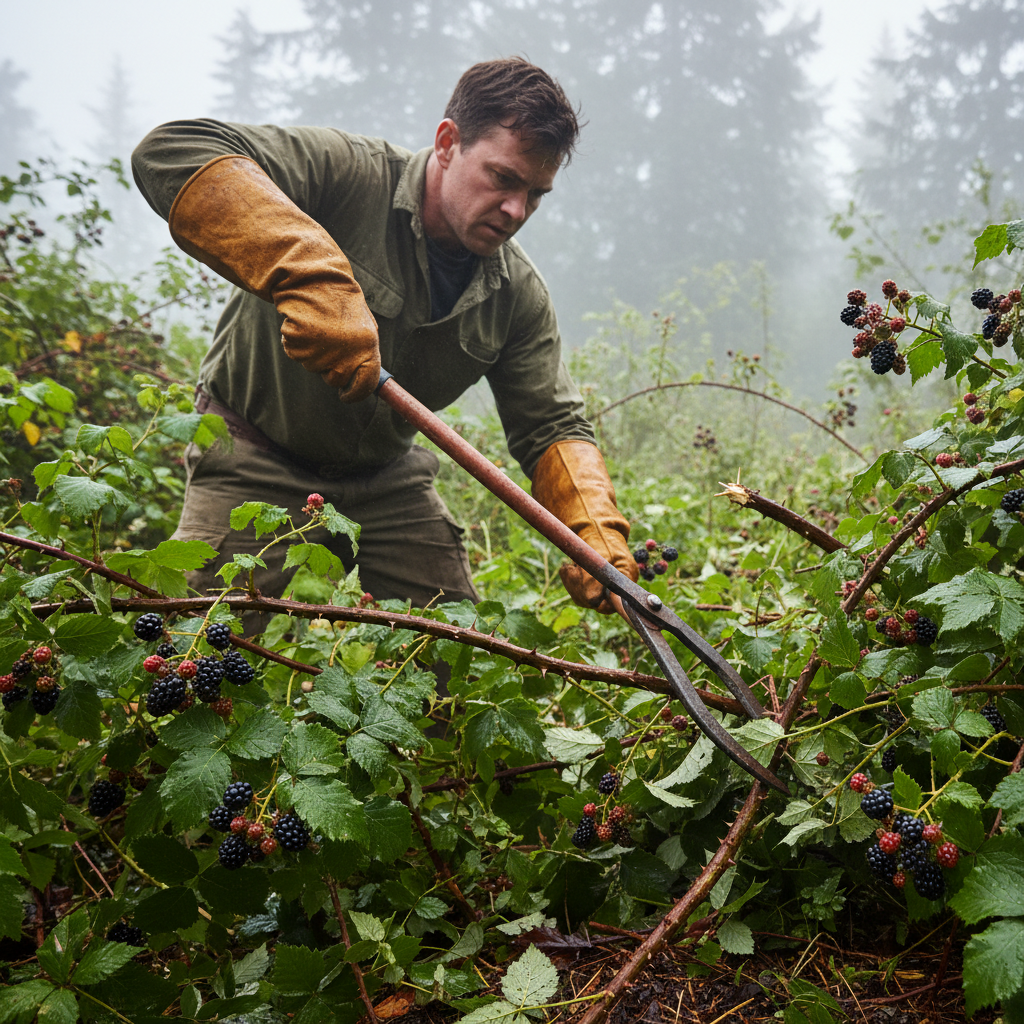
Taming the Beast: Effective Strategies for Managing Aggressive PNW Blackberry Vines
A quick note from Jordan: Some of the tools and supplies I link to in these posts are Amazon affiliate links. If you buy through them, I earn a small commission at zero extra cost to you. It helps me keep Moss & Tomatoes running and allows me to keep writing these free, no-nonsense PNW gardening guides instead of burying the site in annoying popup ads. Thank you for the support!
The PNW Blackberry Menace
Ah, the Pacific Northwest. Land of lush evergreens, misty mornings, and… invasive Himalayan blackberry vines. These aggressive plants are a common sight, taking over neglected lots, scrambling through hedges, and forming impenetrable thickets that choke out native flora. While their sweet berries are a summer treat, their relentless growth and thorny canes can quickly turn a peaceful garden into a battleground.
Ignoring them isn’t an option. Their root systems are tenacious, and left unchecked, a small patch can explode into a dense fortress, making gardening, hiking, or even just walking a thorny challenge. But fear not, fellow PNW gardener! With the right strategy and tools, you can reclaim your space.
Understanding Your Enemy: Blackberry Biology
Before you charge in with shears blazing, it helps to understand what you’re up against. Himalayan blackberries (Rubus armeniacus) are perennial, meaning their roots live for many years, sending up new canes annually. They spread aggressively through:
- **Root suckers:** New plants sprouting from existing root systems.
- **Cane tipping:** Canes touching the ground take root and form new plants.
- **Birds & Beasts:** Animals eat the berries and spread seeds far and wide.
This means simply cutting them back isn’t enough; you need to address the root system.
Manual Removal: The Toughest but Best Method
For smaller infestations or areas near sensitive plants you don’t want to spray, good old-fashioned manual labor is often the most effective. This is hard work, but it’s environmentally friendly and gives you full control.
- **Gear Up:** You’ll need heavy-duty gauntlet gloves (heavy-duty gauntlet gloves), long sleeves, sturdy pants, and eye protection. Those thorns are no joke!
- **Cut & Dig:** Use loppers to cut canes back to about 1-2 feet from the ground. Then, with a sturdy digging shovel or pickaxe, start digging up the root crown. This is the central woody mass from which all the canes originate. You need to remove as much of it as possible.
- **Persistence is Key:** You won’t get it all in one go. New shoots will inevitably emerge. Keep monitoring the area and diligently dig up any new growth as soon as you see it. Depriving the roots of energy will eventually starve the plant.
Chemical Control (Use with Caution!)
For large, dense thickets, especially in areas where manual removal isn’t feasible, chemical herbicides can be an option. **Always exercise extreme caution, follow product labels precisely, and consider local regulations, especially near waterways.**
- **Glyphosate-based products:** These are non-selective, meaning they’ll kill anything green they touch. Apply directly to cut canes (the “cut-stump” method) or to foliage on a dry, calm day. Glyphosate-based products are one such option.
- **Triclopyr-based products:** More selective for broadleaf plants (like blackberries) and less harmful to grasses. Effective as a foliar spray or cut-stump application.
Timing is crucial for chemical control: late summer to early fall, when the plants are actively transporting nutrients to their roots, is generally most effective.
Ongoing Management & Prevention
Once you’ve cleared an area, the work isn’t over. Blackberries are opportunists.
- **Mulch Heavily:** A thick layer (4-6 inches) of wood chips or bark mulch can suppress new growth and make weeding easier.
- **Plant Competitively:** Fill the cleared area with desirable plants, especially fast-growing natives. A full space leaves less room for blackberries to re-establish.
- **Regular Monitoring:** Walk your property regularly and pull out any new blackberry seedlings or suckers immediately. Catching them when they’re small is crucial.
Taming aggressive blackberry vines in the PNW is a marathon, not a sprint. But with a strategic approach and persistence, you can restore balance to your garden and prevent these thorny invaders from taking over.
Ready to stop fighting these thorny invaders? Subscribe below for seasonal maintenance tips and more PNW-specific gardening guides sent straight to your inbox.
Dang bro you’re really aggressive towards those blackberry bushes I swear but you know what really pisses me off more than blackberries is slugs god i hate them little critters they’re so slimy and they slime all over the place I can’t walk ten feet without getting covered in slug slime it’s such a nuissance out here in the PNW I hate slugs with a passion bro I just want to put salt on them and watch them explode like the slimy little suckers they are. Can’t believe the government hasn’t done something to stop them from comin’ and slimin’ up the place anyways take care bro i’m gonna go keep on fightin the good fight.