No-Dig Gardening in the PNW: Building Healthy Soil Without Breaking Your Back
A quick note from Jordan: Some of the tools and supplies I link to in these posts are Amazon affiliate links. If you buy through them, I earn a small commission at zero extra cost to you. It helps me keep Moss & Tomatoes running and allows me to keep writing these free, no-nonsense PNW gardening guides instead of burying the site in annoying popup ads. Thank you for the support!
Embrace the Soil, Ditch the Digging: No-Dig Gardening in the PNW
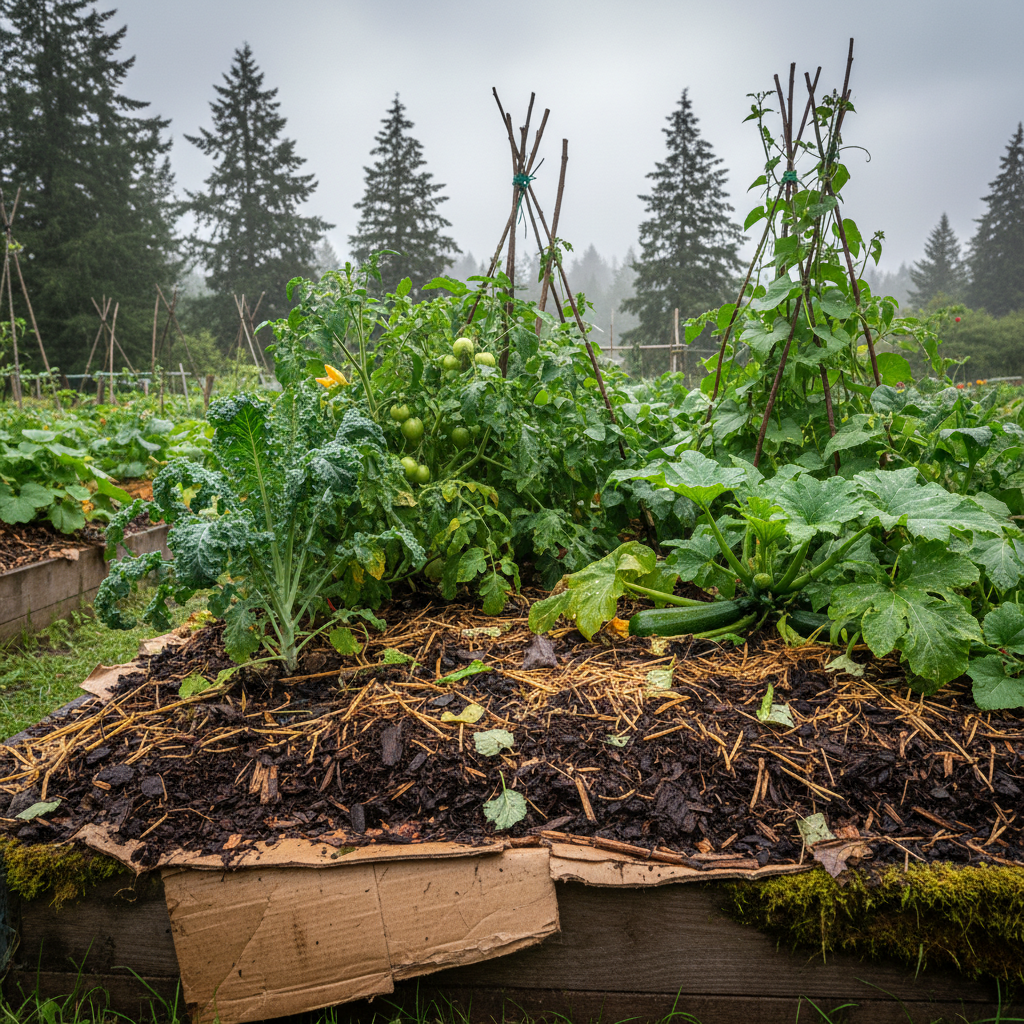
For many Pacific Northwest gardeners, the thought of digging into our often heavy, clay-rich soil is enough to make their backs ache before they even grab a shovel. But what if you could build incredibly fertile, thriving garden beds without ever turning a spade? Welcome to the world of no-dig gardening, a method perfectly suited for the PNW’s unique climate.
No-dig gardening is all about working *with* nature, not against it. By layering organic materials directly onto your soil, you encourage a healthy soil food web, suppress weeds, conserve moisture, and improve drainage – all while building up nutrient-rich, friable soil over time. It’s a game-changer, especially for established gardens or converting lawn into productive beds.
Why No-Dig is Perfect for the PNW
Our region’s distinct challenges often make traditional digging counterproductive:
- **Heavy Clay Soil:** Digging compacts clay further when wet, creating a dense, impenetrable layer. No-dig gently improves structure.
- **Abundant Rain:** Layers act like a sponge, holding moisture during dry spells and allowing excess water to drain slowly during downpours, preventing runoff.
- **Weed Pressure:** A thick initial layer of cardboard and compost effectively smothers most perennial weeds (like those stubborn buttercups and horsetail), giving your new plants a head start.
- **Native Soil Health:** Protects the existing soil structure and beneficial mycorrhizal fungi.
Getting Started: Your No-Dig Foundation
The beauty of no-dig is its simplicity. You don’t need to buy expensive raised bed kits (though they work well with this method); you can build directly on the ground.
Step 1: Lay Down Your Weed Barrier
Start by laying a thick layer of overlapping cardboard directly over your chosen garden area. Remove all tape and glossy labels. Wet the cardboard thoroughly – this helps it break down and conform to the ground, smothering weeds beneath.
Step 2: Build Your Layers
This is where the magic happens. You’ll be adding layers of organic material. A common recipe (adjust based on what you have):
- **Base Layer (2-4 inches):** Coarse woody material, small branches, straw, or even wood chips. This provides long-term structure.
- **Green Layer (2-3 inches):** Fresh grass clippings, green plant waste, or nitrogen-rich materials.
- **Brown Layer (2-3 inches):** Dried leaves, more straw, or shredded paper.
- **Compost (4-6 inches):** This is the crown jewel. A thick layer of good quality compost is where you’ll plant. It provides immediate nutrients and beneficial microbes.
For moving these hefty layers around without wrecking your back, a good quality garden cart or trolley is invaluable. I recommend this good quality garden cart or trolley for its durability and pneumatic tires that handle uneven PNW terrain.
Step 3: Planting into Your New Beds
You can plant directly into the top compost layer. For transplants, simply make a hole down to the compost. For seeds, sprinkle a thin layer of seed-starting mix on top of the compost before sowing.
A broadfork is a fantastic tool for gently aerating compacted subsoil *before* you start your no-dig layers, or for light aeration in established beds. It creates channels for air and water without inverting soil layers. If your starting soil is particularly dense, consider a broadfork to help kickstart drainage.
Maintenance of Your No-Dig Garden
No-dig isn’t “no-work,” but it’s certainly less back-breaking. Maintenance largely involves:
- **Top-dressing Annually:** Each spring, add another 2-4 inches of fresh compost and mulch. This continues to feed the soil and suppress weeds.
- **Weeding:** You’ll still get some weeds, especially wind-blown seeds. They’re much easier to pull from loose compost.
- **Watering:** The layers retain moisture well, so you’ll likely water less frequently.
Transform your PNW gardening experience with no-dig methods. You’ll foster healthier soil, reduce your workload, and create a resilient garden that thrives with nature.
Ready to build healthy soil without breaking your back? Subscribe below for seasonal maintenance tips and more PNW-specific gardening guides sent straight to your inbox.