
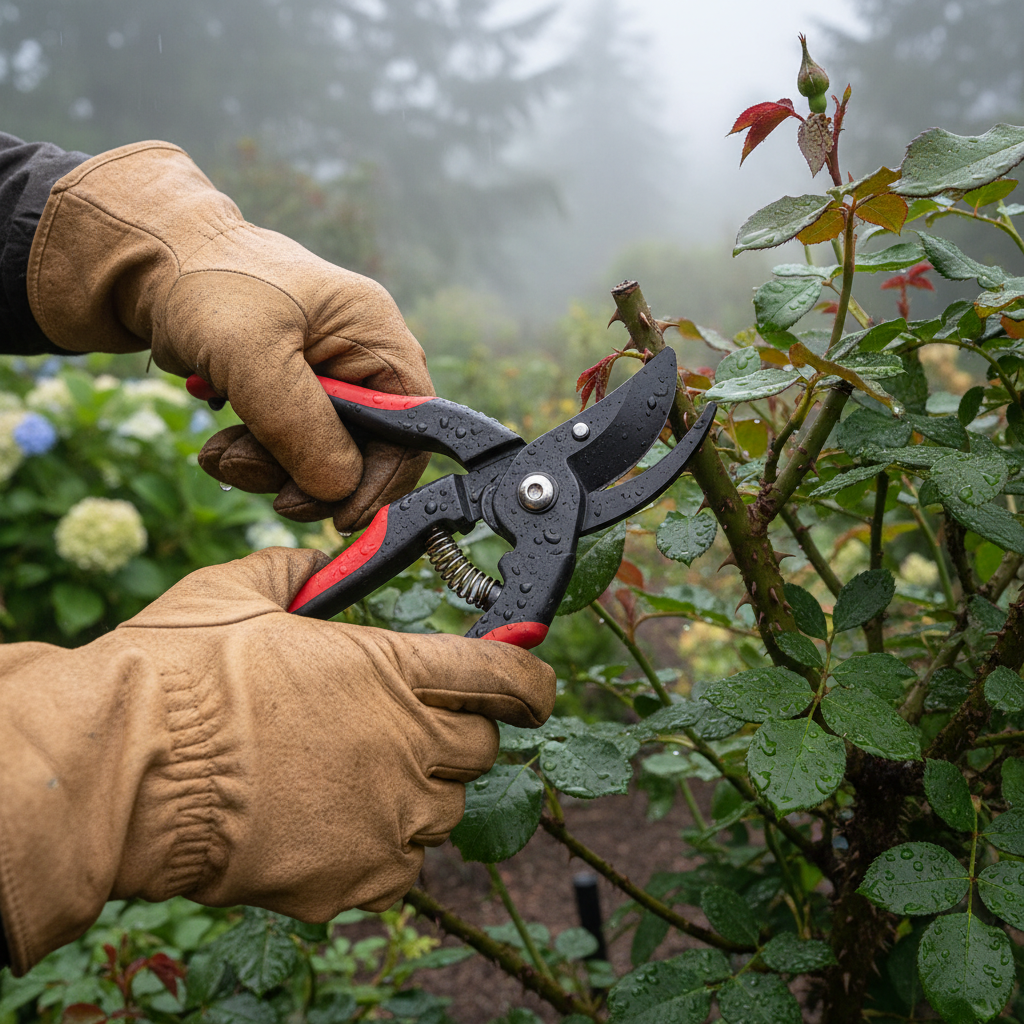
Pruning Roses in the PNW: Timing and Techniques for Healthy Blooms
A quick note from Jordan: Some of the tools and supplies I link to in these posts are Amazon affiliate links. If you buy through them, I earn a small commission at zero extra cost to you. It helps me keep Moss & Tomatoes running and allows me to keep writing these free, no-nonsense PNW gardening guides instead of burying the site in annoying popup ads. Thank you for the support!
The Dampness Factor: Why Airflow Matters
In our climate, the goal of pruning goes beyond simple aesthetics. It is about airflow. When the air is stagnant, fungal spores love to settle on wet foliage. Preventing black spot on roses starts with creating an open, vase-like structure that allows the breeze to dry out the center of the plant after our relentless spring showers.
A well-pruned rose is a ventilated rose. By removing crossing branches and thinning out the center, we are essentially building a defensive system against mildew and blight.
When to Start Pruning Roses in the PNW
Timing is everything here in the Pacific Northwest. We often get a false sense of spring in February, but hold off on your main pruning until the forsythia blooms—that is the reliable indicator that the danger of hard frost has passed. Typically, this lands between late February and mid-March.
- Watch the buds: You are looking for the swelling of the “eyes” on the canes.
- Be patient: Pruning too early encourages new growth that can be knocked back by a surprise late freeze.
Essential Tools for the Job
Do not go into this with dull equipment. A ragged cut is an invitation for disease to enter the plant. You need tools that make clean, surgical slices.
- Bypass Pruners: You need a sharp, durable pair of bypass-style shears. These act like scissors, giving you a clean cut that heals quickly.
Felco F-2 Classic Manual Hand Pruner - Fungicide/Disinfectant: Cleanliness is vital. Between every plant (or if you encounter diseased wood), you should disinfect your blades to avoid spreading spores.
Lysol Disinfectant Spray
Techniques for Healthy Blooms
Once you have your gear ready, focus on these three pillars of rose care:
1. The 45-Degree Cut
Always cut at a 45-degree angle about a quarter-inch above an outward-facing bud. This directs water away from the bud eye, preventing rot.
2. Thinning the Center
Remove any branches that grow toward the center of the bush. Your goal is to create a “vase” shape that allows light to hit the heart of the plant.
3. The Removal of the “Three Ds”
Always cut away anything that is Dead, Damaged, or Diseased. If it is brown and brittle, take it off. If it shows spots, remove it entirely to stop the spread.
Conclusion
Pacific Northwest rose care takes a bit of grit, but the reward—a flush of healthy, vibrant blooms in June—is well worth the effort. By prioritizing airflow and keeping your tools sharp, you can keep the dampness at bay and enjoy a season of beautiful roses.
Join the PNW Garden Circle
Want more seasonal tips for navigating the damp, beautiful PNW gardening calendar? Subscribe to our newsletter for monthly advice, pest management hacks, and planting guides delivered straight to your inbox.

Hey man wish this post were about slugs i hate slugs so much i wish slugs would all just shrivel up and die likr when i pour salt on those bastards its like a slug epidemic this year hopefully next year gets better but i appreciate you fighting the good fight against slugs hate those badtards