
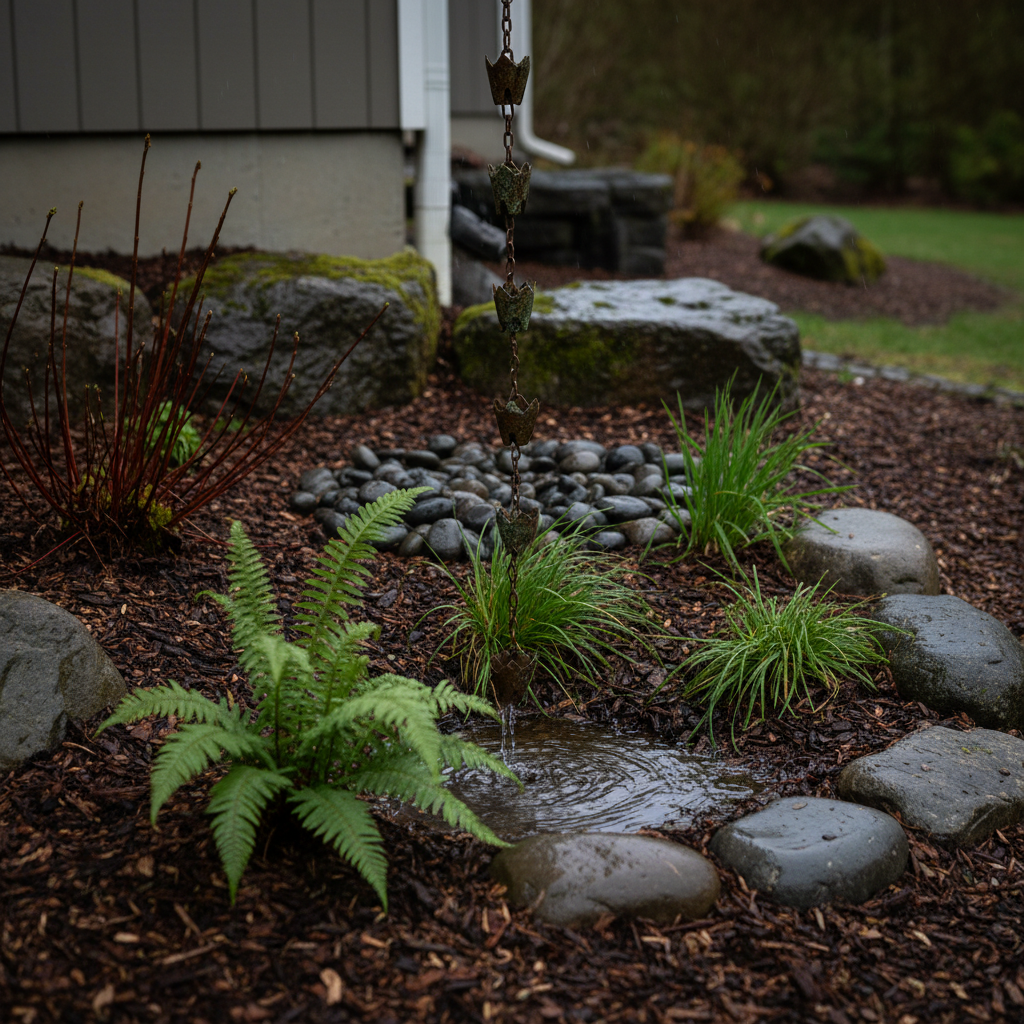
Building a PNW Rain Garden: Stop Winter Yard Swamps
A quick note from Jordan: Some of the tools and supplies I link to in these posts are Amazon affiliate links. If you buy through them, I earn a small commission at zero extra cost to you. It helps me keep Moss & Tomatoes running and allows me to keep writing these free, no-nonsense PNW gardening guides instead of burying the site in annoying popup ads. Thank you for the support!
The PNW “Swamp” Problem
If you garden in the Pacific Northwest, you know the drill. From November to April, the rain doesn’t just fall—it accumulates. If your property has low spots, poor drainage, or heavy clay soil, you’re likely dealing with standing water that turns your lawn into a miniature swamp.
Instead of fighting the water with expensive French drains or endless regrading, why not work with it? A rain garden is a depressed, landscaped area designed to capture and absorb rainwater runoff from your roof, driveway, or lawn. It filters pollutants, reduces flooding, and creates a thriving habitat for local pollinators.
Choosing the Right Spot
Location is everything. Your rain garden needs to be:
- At least 10 feet away from your home’s foundation (to prevent basement flooding).
- In a natural depression or somewhere you can easily direct runoff using a downspout extension or a decorative copper rain chain.
- In an area that gets full or partial sun to help plants thrive and water evaporate faster.
- Not located over septic tanks or underground utility lines (always call 811 before digging!).
Digging In: The Soil Prep
This is the hardest part. You need to dig a shallow, bowl-shaped depression, usually 6 to 12 inches deep. The secret to a successful rain garden in our native clay is amending the soil so it actually drains.
For breaking through compacted clay and slicing through stubborn Douglas-fir roots, I highly recommend using a serious digging tool like the Root Assassin Shovel. Its serrated edges make excavating the basin significantly easier.
Once you’ve dug the hole, mix the excavated soil with about 30% compost and 30% coarse sand before returning some of it to the basin. This creates a “sponge” that will hold water temporarily while allowing it to slowly infiltrate the ground.
Selecting PNW Native Plants
You need plants that can handle “wet feet” in the winter but tolerate our dry, drought-prone summers. Native plants are your best bet. Here’s a quick list to get you started:
- For the Bottom (Wettest Zone): Slough Sedge, Red-osier Dogwood, and native Rushes.
- For the Slopes (Occasionally Wet): Sword Fern, Oregon Grape, and Snowberry.
- For the Edges (Driest Zone): Salal, Red-flowering Currant, and Kinnikinnick.
Maintenance is Minimal
The beauty of a rain garden, especially one planted with natives, is that once established, it largely takes care of itself. You’ll need to water the plants during their first two summers, and do some light weeding in the spring, but otherwise, let nature do the work.
Ready to stop fighting the rain and start designing with it? Subscribe below for seasonal maintenance tips and more PNW-specific gardening guides sent straight to your inbox.
One Comment